Textile Recycling Innovations 2026: Sustainable Fashion Future
Anúncios
The fashion industry, long synonymous with rapid trends and disposable consumption, is undergoing a profound transformation. As we look towards 2026, the spotlight is firmly on sustainability, with textile recycling innovations leading the charge. The sheer volume of textile waste generated globally presents both a monumental challenge and an unprecedented opportunity. Every year, millions of tons of clothing end up in landfills, contributing to pollution, resource depletion, and greenhouse gas emissions. However, advancements in technology, coupled with increasing consumer awareness and regulatory pressures, are paving the way for a more circular and responsible textile economy.
Anúncios
This article delves deep into the most promising textile recycling innovations set to redefine the fashion landscape in 2026, with a particular focus on the United States. We will explore the technological breakthroughs, the economic implications, the evolving policy environment, and the collaborative efforts driving this crucial shift. From advanced mechanical processes to revolutionary chemical recycling methods, the future of fashion is being rewoven, thread by sustainable thread. Understanding these developments is not just about staying informed; it’s about being part of a movement that promises a healthier planet and a more ethical industry.
The Urgent Need for Textile Recycling Innovations
Before we dive into the specifics of 2026’s groundbreaking textile recycling innovations, it’s essential to grasp the scale of the problem we’re addressing. The fast fashion model, characterized by low costs and high turnover, has exacerbated textile waste to alarming levels. In the US alone, the Environmental Protection Agency (EPA) reported that textiles accounted for 17 million tons of municipal solid waste in 2018, with only 14.7% being recycled. The vast majority ended up in landfills or incinerators. This waste stream is not just an aesthetic issue; it’s an environmental catastrophe.
Anúncios
Landfilled textiles decompose slowly, releasing methane, a potent greenhouse gas, and leaching toxic dyes and chemicals into soil and groundwater. Incineration, while reducing volume, releases pollutants into the atmosphere. Moreover, the production of new textiles is resource-intensive, requiring vast amounts of water, energy, and virgin raw materials. Cotton, for instance, is one of the most water-intensive crops, while synthetic fibers like polyester are derived from fossil fuels. The imperative to embrace textile recycling innovations is therefore multifaceted: it addresses waste, conserves resources, reduces pollution, and mitigates climate change.
The fashion industry’s environmental footprint extends beyond waste. The entire supply chain, from raw material extraction to manufacturing, dyeing, finishing, and transportation, contributes significantly to global carbon emissions. By closing the loop through effective recycling, the industry can drastically reduce its reliance on virgin materials and minimize its overall environmental impact. This shift is not merely a trend; it’s a fundamental recalibration of how we produce and consume clothing, driven by a collective understanding that our current practices are unsustainable.
Key Textile Recycling Innovations on the Horizon for 2026
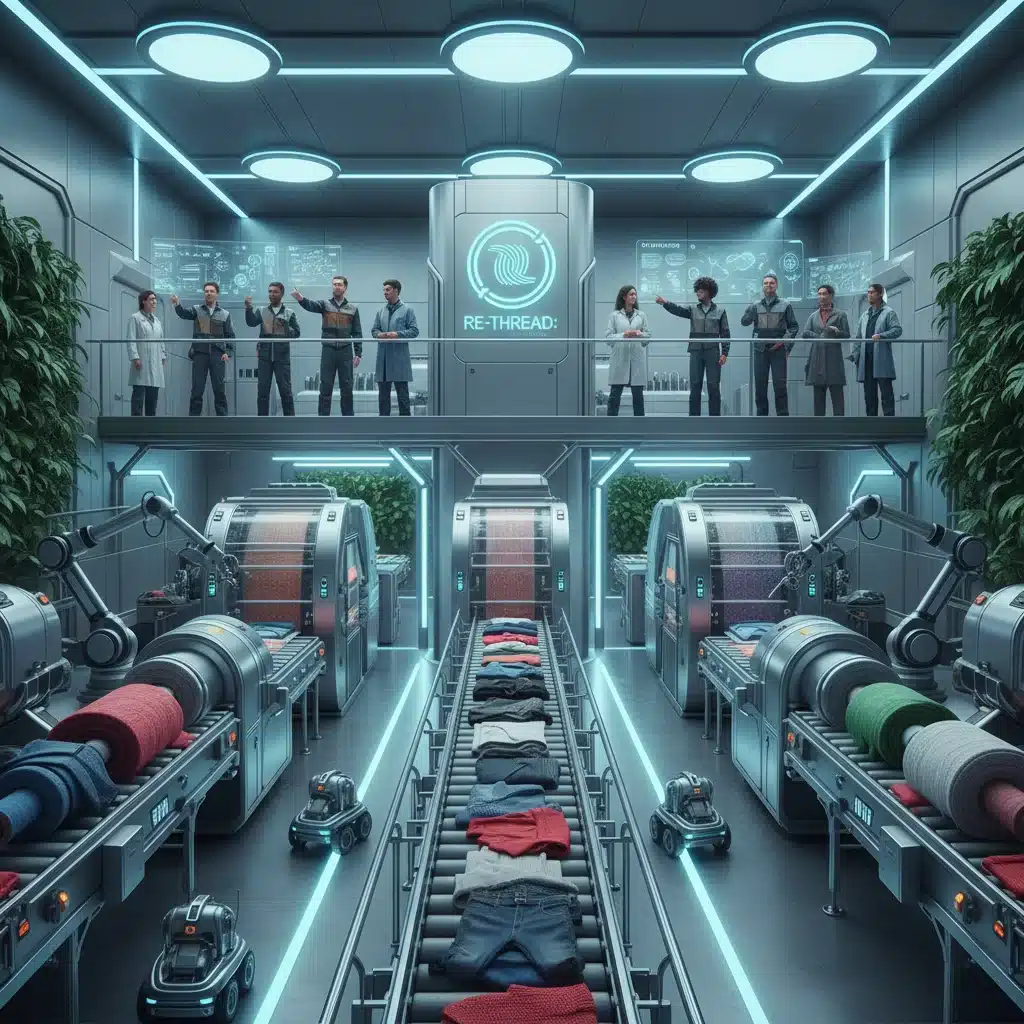
The landscape of textile recycling innovations is rapidly evolving, with researchers and companies investing heavily in developing scalable and efficient solutions. By 2026, several key technologies are expected to reach critical mass, transforming how textiles are processed and repurposed.
1. Advanced Mechanical Recycling
Mechanical recycling, the oldest form of textile recycling, involves shredding fabrics into fibers that can then be re-spun into new yarns or used as stuffing. While traditionally limited by fiber length degradation and the inability to process blended fabrics, significant advancements are making this method more versatile.
- Improved Sorting Technologies: Automated sorting systems utilizing AI and spectroscopy can identify fiber compositions with unprecedented accuracy, allowing for more precise material separation. This is crucial for maintaining the quality of recycled fibers, especially for mixed textiles.
- Enhanced Fiber Regeneration: New mechanical processes are being developed to minimize fiber damage during shredding, resulting in longer, stronger recycled fibers. This reduces the need for virgin fiber blending, improving the circularity of the product.
- Processing Blends: While chemical recycling is often highlighted for blends, mechanical approaches are also making strides. Innovations in fiber separation at a microscopic level are enabling more effective processing of polyester-cotton blends, for example, allowing for the recovery of both components.
2. Revolutionary Chemical Recycling Methods
Chemical recycling is perhaps the most exciting area of textile recycling innovations, offering the ability to break down textiles into their molecular components, which can then be re-polymerized into new, high-quality fibers. This method is particularly effective for synthetic fibers and complex blends.
- Polyester Depolymerization: Technologies like glycolysis and methanolysis can depolymerize PET (polyethylene terephthalate) from polyester textiles back into its monomers (DMT or BHET). These monomers are indistinguishable from virgin materials and can be used to produce new polyester fibers of virgin quality. Companies are scaling up these processes, promising a truly closed-loop system for polyester.
- Cellulose Regeneration (for Cotton, Viscose): For cellulosic fibers like cotton and viscose, solvent-based recycling methods are gaining traction. Processes such as the ‘lyocell’ process or other advanced solvent systems dissolve cellulose from discarded fabrics and regenerate it into new, high-quality cellulosic fibers. This addresses a major challenge in cotton recycling, which often results in shorter, weaker fibers with mechanical methods.
- Mixed Textile Separation: One of the holy grails of textile recycling is effectively separating and recovering components from mixed-fiber garments (e.g., polyester-cotton). Emerging chemical processes are designed to selectively dissolve one fiber type while leaving the other intact, allowing for the recovery of both materials in a usable form.

3. Bio-Based and Biological Recycling
Beyond traditional mechanical and chemical approaches, bio-based and biological textile recycling innovations are emerging as promising, environmentally friendly alternatives.
- Enzymatic Recycling: This method uses specific enzymes to break down textile fibers, particularly cellulosic materials, into their basic building blocks (sugars). These sugars can then be fermented to produce new bioplastics or bio-based chemicals, offering a highly sustainable pathway for cotton and other natural fibers.
- Microbial Degradation: Research is exploring the use of specialized microbes to digest textile waste, converting it into valuable resources. While still in early stages, this offers a potentially low-energy and low-chemical approach to textile decomposition.
4. Digitalization and Traceability
Underpinning all these technological advancements is the critical role of digitalization. Effective textile recycling relies on knowing the composition of garments. By 2026, we expect to see wider adoption of:
- Digital Product Passports: These digital tags or QR codes embedded in garments will provide comprehensive information about a product’s material composition, origin, manufacturing process, and end-of-life instructions, significantly streamlining sorting and recycling.
- Blockchain Technology: Blockchain can ensure transparency and traceability throughout the textile supply chain, from fiber to finished garment and back to recycling, building trust and verifying sustainability claims.
The US Fashion Industry’s Role and Response
The United States, as one of the largest consumer markets for fashion, plays a pivotal role in driving the adoption of textile recycling innovations. Several factors are influencing this shift:
1. Policy and Regulatory Landscape
While the US has historically lagged behind Europe in textile recycling regulations, there’s growing momentum for policy changes. By 2026, we anticipate:
- Extended Producer Responsibility (EPR) Schemes: Similar to those in Europe, EPR policies would hold brands accountable for the entire lifecycle of their products, incentivizing them to design for recyclability and invest in recycling infrastructure. Several states are exploring such legislation.
- Investment in Infrastructure: Government funding and public-private partnerships are crucial for building the necessary collection, sorting, and processing infrastructure required for large-scale textile recycling.
- Green Procurement Policies: Government agencies and large corporations are increasingly adopting policies that favor textiles made from recycled content, creating market demand for recycled fibers.
2. Brand Adoption and Investment
Major US fashion brands are recognizing the economic and reputational benefits of embracing circularity. Many are setting ambitious targets for using recycled content and are actively investing in textile recycling innovations.
- Recycled Content Targets: Brands are committing to increasing the percentage of recycled fibers in their collections, driven by consumer demand and sustainability goals.
- Take-Back Programs: More brands are implementing in-store or mail-back take-back programs for used garments, creating a direct pipeline for recycling.
- Collaborations and Partnerships: Brands are partnering with technology providers, recyclers, and non-profits to develop and scale up recycling solutions. These collaborations are vital for overcoming the complexities of textile waste management.
3. Consumer Demand and Awareness
A significant driver for textile recycling innovations is the growing consumer awareness of fashion’s environmental impact. Consumers, particularly younger generations, are increasingly seeking sustainable and ethically produced clothing.
- Demand for Transparency: Consumers want to know where their clothes come from and what they’re made of, pushing brands towards greater transparency in their supply chains.
- Preference for Recycled Materials: There’s a rising preference for garments made from recycled fibers, even if they come at a slightly higher price point.
- Engagement with Circular Models: Consumers are becoming more open to rental, resale, and repair services, all of which contribute to extending the life of garments and reducing waste.
Challenges and Opportunities for Scaling Up
Despite the exciting progress in textile recycling innovations, several challenges remain in scaling these technologies to meet the vast demand of the fashion industry.
1. Collection and Sorting Infrastructure
The biggest hurdle is often the initial collection and sorting of textile waste. Current systems are fragmented and inefficient, making it difficult to gather sufficient quantities of homogeneous material for recycling. Developing widespread, accessible collection points and advanced automated sorting facilities is paramount.
2. Economic Viability
While the long-term benefits are clear, the upfront investment in new recycling technologies and infrastructure can be substantial. Making recycled fibers cost-competitive with virgin materials is crucial for widespread adoption. Policy incentives, carbon pricing, and economies of scale will play a significant role in achieving this.
3. Quality and Performance of Recycled Fibers
Ensuring that recycled fibers consistently meet the quality and performance standards required by brands and consumers is vital. While chemical recycling promises virgin-quality fibers, mechanical recycling often faces challenges with fiber degradation. Continuous R&D is needed to improve the properties of all recycled materials.
4. Design for Recyclability
For textile recycling innovations to be truly effective, garments must be designed with their end-of-life in mind. This means minimizing complex blends, avoiding excessive trims and accessories that are difficult to remove, and favoring mono-material constructions where possible. “Design for circularity” will become a standard practice by 2026.

The Future of Sustainable US Fashion in 2026 and Beyond
The year 2026 marks a critical juncture for sustainable fashion in the US, with textile recycling innovations serving as a cornerstone of this transformation. We are moving from a linear ‘take-make-dispose’ model to a circular economy where waste is minimized, and resources are kept in use for as long as possible. This shift will have far-reaching implications, not just for the environment but also for the economy and society.
The proliferation of advanced recycling technologies will create new industries and job opportunities, particularly in green manufacturing and waste management. It will also foster greater collaboration across the value chain, from material scientists and recyclers to designers and retailers. Brands that embrace these innovations will not only meet regulatory requirements but also gain a competitive edge by appealing to an increasingly eco-conscious consumer base.
Moreover, the focus on circularity extends beyond just recycling. It encompasses product longevity, repairability, and the development of business models that prioritize access over ownership, such as rental and resale platforms. These complementary strategies, combined with robust textile recycling innovations, will collectively build a more resilient and responsible fashion ecosystem.
However, the journey is far from over. Continuous investment in research and development, supportive policy frameworks, and sustained consumer engagement will be essential to realize the full potential of these innovations. Education will also play a crucial role, informing consumers about how to properly dispose of textiles and the benefits of choosing recycled products. The fashion industry of 2026 will be defined not just by its aesthetics, but by its ethics and its commitment to planetary well-being.
Conclusion: Weaving a Circular Future
The rapid evolution of textile recycling innovations offers a beacon of hope for a sustainable future in fashion. By 2026, we anticipate a significant acceleration in the adoption of advanced mechanical, chemical, and biological recycling methods, particularly within the US market. These technologies, coupled with enabling policies and growing consumer demand, are poised to dramatically reduce textile waste and minimize the industry’s environmental footprint.
The transition to a circular textile economy is a complex undertaking, requiring concerted effort from all stakeholders: governments, brands, innovators, and consumers. While challenges such as infrastructure development and economic viability persist, the opportunities for environmental restoration and economic growth are immense. The vision for 2026 is one where discarded garments are no longer seen as waste but as valuable resources, continuously re-entering the production cycle to create new, beautiful, and sustainable fashion. By embracing these transformative textile recycling innovations, the US fashion industry is not just adapting to change; it is actively weaving a more sustainable and prosperous future for generations to come.