Fashion Entrepreneur Finance: 2026 US Startup Spending Optimization

Anúncios
The exhilarating world of fashion entrepreneurship is a tapestry woven with creativity, passion, and, crucially, financial acumen. For US fashion startups, navigating the economic landscape of 2026 presents both unique challenges and unparalleled opportunities. In an industry renowned for its dynamism and sometimes unforgiving competition, mastering fashion startup finance is not just an advantage—it’s a prerequisite for survival and sustainable growth. This comprehensive guide is meticulously crafted to empower emerging fashion brands with the knowledge and strategies to optimize their spending by a significant 15% and beyond, ensuring a robust financial foundation for the years to come.
Anúncios
The stakes are high. According to recent industry reports, while consumer spending on apparel continues to grow, so does the complexity of supply chains, marketing channels, and regulatory environments. For a nascent fashion brand, every dollar spent must contribute demonstrably to its mission and bottom line. This article delves into actionable strategies, from meticulous budgeting and cost-effective production to savvy marketing investments and intelligent inventory management, all tailored for the ambitious US fashion entrepreneur looking to thrive in 2026 and beyond.
The 2026 Financial Landscape for US Fashion Startups
Before diving into specific optimization tactics, it’s vital to understand the prevailing economic climate and its specific implications for fashion startup finance in the United States. 2026 is projected to be a year of continued digital transformation, increased consumer demand for sustainability, and evolving supply chain dynamics. Inflationary pressures, though potentially moderating, will still necessitate careful cost control, while a competitive talent market will demand strategic investment in human capital.
Anúncios
Key Economic Trends Impacting Fashion in 2026:
- Digital-First Consumerism: The accelerated shift to online shopping continues, making e-commerce infrastructure, digital marketing, and data analytics indispensable expenses.
- Sustainability Imperative: Consumers are increasingly prioritizing eco-friendly and ethically produced goods. This impacts material sourcing, production processes, and transparency, often with associated costs that need careful budgeting.
- Supply Chain Volatility: Geopolitical events, climate change, and logistical bottlenecks can disrupt supply chains, leading to price fluctuations and delays. Diversification and resilient sourcing strategies become crucial.
- Data-Driven Decisions: The ability to collect, analyze, and act on consumer data is paramount for targeted marketing, inventory optimization, and product development. Investment in appropriate tools and expertise is non-negotiable.
- Talent Acquisition and Retention: The demand for skilled designers, marketers, and operations specialists remains high. Offering competitive compensation and fostering a positive work environment are critical, requiring careful financial planning.
Understanding these trends allows fashion entrepreneurs to anticipate financial challenges and proactively integrate cost-saving and revenue-generating strategies into their business models. The goal is not merely to cut costs blindly, but to reallocate resources more effectively, ensuring that every expenditure contributes to strategic objectives and long-term viability.
Pillars of Spending Optimization: Achieving 15% Reduction
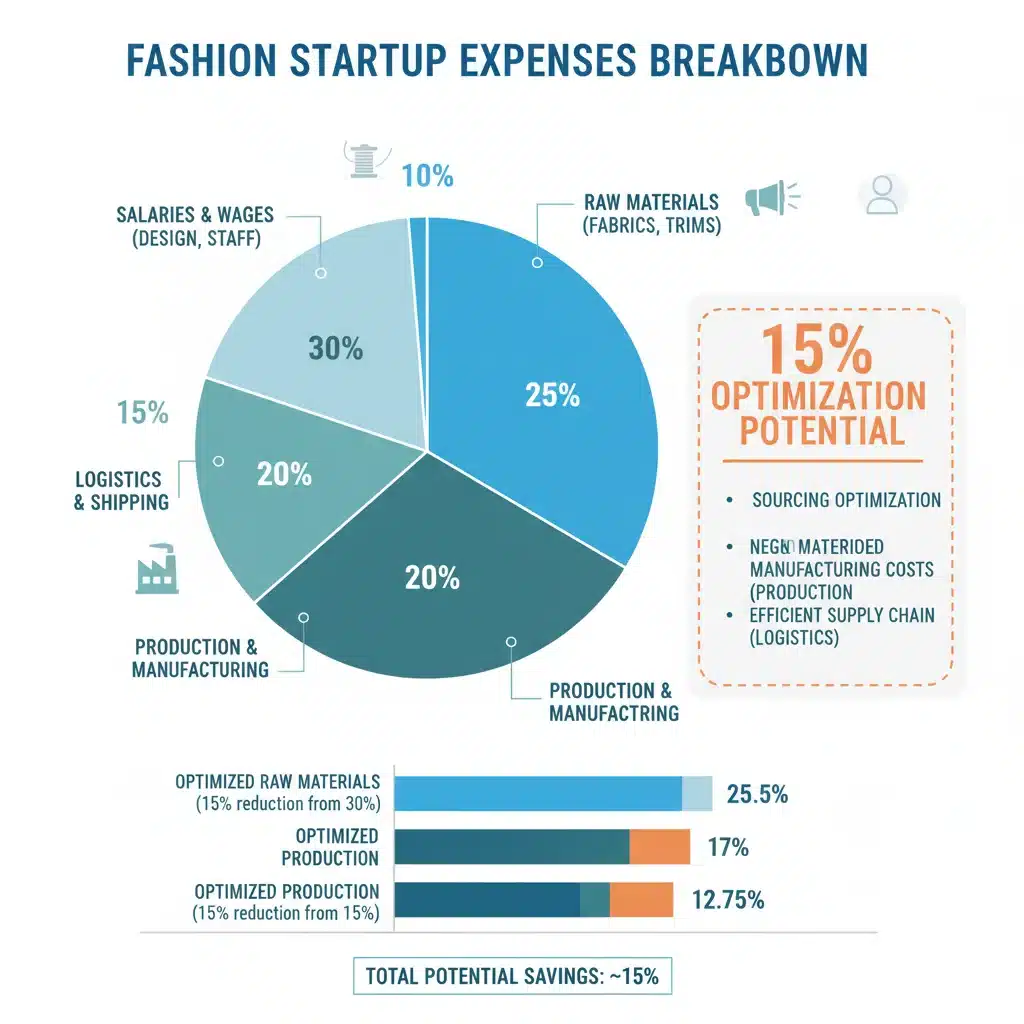
Achieving a 15% spending optimization requires a multi-faceted approach, touching every aspect of your fashion startup finance. This isn’t about compromising quality or stifling innovation; it’s about smart resource allocation, efficiency, and leveraging technology. Here are the core pillars:
1. Strategic Sourcing and Production Efficiency
For fashion brands, a significant portion of expenditure lies in raw materials and manufacturing. Optimizing these areas can yield substantial savings.
- Negotiate with Suppliers: Don’t settle for the first quote. Build strong relationships with suppliers and negotiate bulk discounts, longer payment terms, or loyalty incentives. Explore multiple suppliers for each material to ensure competitive pricing and backup options.
- Local vs. International Sourcing: Evaluate the trade-offs between local and international sourcing. While international may offer lower unit costs, consider shipping, customs duties, lead times, and potential quality control issues. Local sourcing can reduce lead times, carbon footprint, and support local economies, sometimes at a premium.
- Minimum Order Quantities (MOQs): Carefully manage MOQs. Over-ordering to get a slightly better price can lead to excess inventory, storage costs, and potential markdowns. Utilize sales data to forecast demand accurately and align MOQs with anticipated sales.
- Lean Manufacturing Principles: Adopt lean principles to minimize waste in production. This includes reducing defects, optimizing production runs, and streamlining processes to cut down on labor and material waste.
- Sustainable Material Investment: While sustainable materials might have a higher upfront cost, they can attract a growing segment of environmentally conscious consumers, justifying the investment and potentially commanding higher price points, thereby optimizing overall revenue per unit.
2. Intelligent Inventory Management
Inventory is often a fashion startup’s largest asset, but also its biggest liability if mismanaged. Excess inventory ties up capital, incurs storage costs, and risks becoming obsolete. Insufficient inventory leads to lost sales and customer dissatisfaction.
- Accurate Forecasting: Invest in robust sales forecasting tools and methodologies. Analyze historical sales data, market trends, seasonal variations, and promotional impacts to predict demand more precisely.
- Just-In-Time (JIT) Inventory: Explore JIT models where materials are ordered and received only when needed for production, minimizing storage costs and waste. This requires strong supplier relationships and reliable logistics.
- Dropshipping and On-Demand Production: For certain product lines or initial launches, consider dropshipping or on-demand production models to reduce inventory risk entirely. While margins might be slightly lower, the capital savings can be significant.
- Inventory Turnover Analysis: Regularly analyze your inventory turnover rate. A low turnover rate indicates slow-moving inventory, signaling potential issues with product appeal or pricing.
- Strategic Discounting: Plan for end-of-season sales or promotions to clear slow-moving stock rather than letting it sit indefinitely. Factor these potential markdowns into your initial pricing strategy.
3. Optimized Marketing and Customer Acquisition
Marketing is essential for brand visibility, but it can also be a significant cash drain if not managed strategically. Focus on high-ROI activities.
- Data-Driven Marketing: Utilize analytics to understand which marketing channels and campaigns yield the best return on investment (ROI). Shift budget away from underperforming channels.
- Content Marketing: Develop high-quality, engaging content (blog posts, social media, videos) that resonates with your target audience. This builds brand loyalty and organic traffic, reducing reliance on paid ads.
- Influencer Marketing (Micro-Influencers): Instead of expensive macro-influencers, partner with micro-influencers whose audience is highly engaged and aligned with your brand values. This can offer better ROI.
- Email Marketing: Build an email list and nurture leads through targeted email campaigns. Email marketing consistently delivers one of the highest ROIs.
- Retargeting Campaigns: Focus on retargeting ads to website visitors who have shown interest but haven’t purchased. These audiences are often more likely to convert.
- Community Building: Foster an online community around your brand. Engaged customers become advocates, driving organic growth and reducing customer acquisition costs.
4. Lean Operations and Technology Leverage
Streamlining internal operations and wisely investing in technology can drastically reduce overheads and improve efficiency, directly impacting fashion startup finance.
- Cloud-Based Solutions: Utilize cloud software for accounting, project management, inventory tracking, and CRM. These often operate on a subscription model, reducing upfront IT infrastructure costs.
- Automation: Automate repetitive tasks such as order processing, customer service responses (chatbots), and social media scheduling. This frees up valuable human resources for more strategic tasks.
- Outsourcing Non-Core Functions: Consider outsourcing tasks like accounting, payroll, legal services, or even certain aspects of customer service. This can be more cost-effective than hiring full-time staff, especially for specialized roles.
- Remote Work Models: Embrace remote or hybrid work models where feasible. This can reduce office space requirements, utility costs, and provide access to a wider talent pool.
- Energy Efficiency: If you have a physical presence (studio, office, retail), invest in energy-efficient lighting, appliances, and HVAC systems to reduce utility bills.
5. Prudent Financial Management and Cash Flow Optimization
At the heart of optimizing fashion startup finance is robust financial management. This involves more than just cutting costs; it’s about understanding and controlling the flow of money in and out of your business.
- Detailed Budgeting: Create a meticulous budget that categorizes every expense. Regularly compare actual spending against your budget to identify discrepancies and areas for adjustment.
- Cash Flow Projections: Develop accurate 12-month cash flow projections. This helps anticipate periods of surplus and deficit, allowing you to plan for funding needs or investment opportunities.
- Expense Review: Conduct a quarterly or bi-annual review of all recurring expenses. Are there subscriptions you no longer use? Can you negotiate better rates for services like insurance, internet, or software?
- Accounts Receivable and Payable Management: Implement efficient invoicing and collection processes to ensure timely payments from customers. Negotiate favorable payment terms with suppliers (e.g., net 60 instead of net 30) to extend your cash conversion cycle.
- Emergency Fund: Maintain a healthy cash reserve (at least 3-6 months of operating expenses) to weather unexpected challenges without disrupting operations or resorting to high-interest debt.
Implementing the 15% Optimization Goal: A Step-by-Step Guide
Setting a 15% optimization target is ambitious but achievable with a structured approach. Here’s how to break it down:
Step 1: Conduct a Comprehensive Financial Audit
Before you can optimize, you need to understand where your money is currently going. Gather all financial statements, including profit and loss statements, balance sheets, and cash flow statements for the past 12-24 months.
- Categorize Expenses: Group expenses into logical categories (e.g., raw materials, manufacturing, marketing, salaries, rent, utilities, software subscriptions).
- Identify Major Cost Centers: Pinpoint the top 3-5 areas where your startup spends the most money. These are often the areas with the greatest potential for savings.
- Analyze ROI: For each expense, particularly in marketing and technology, assess its return on investment. Is it delivering value commensurate with its cost?
Step 2: Set Specific, Measurable, Achievable, Relevant, Time-bound (SMART) Goals
Don’t just aim for ‘15% savings.’ Break it down. For example:
- “Reduce raw material costs by 5% through new supplier negotiations by Q3 2026.”
- “Decrease marketing spend by 10% while maintaining customer acquisition numbers by reallocating budget to high-performing digital channels by Q4 2026.”
- “Lower inventory holding costs by 7% through improved forecasting and JIT principles by Q2 2026.”
Step 3: Develop an Action Plan for Each Optimization Area
For each SMART goal, outline the specific actions required, who is responsible, and the timeline for completion.
Example: Raw Material Cost Reduction
- Action: Research and identify three alternative fabric suppliers.
- Responsible: Production Manager
- Timeline: By end of January 2026
- Action: Obtain quotes and samples from new suppliers.
- Responsible: Production Manager
- Timeline: By end of February 2026
- Action: Negotiate bulk discounts with existing and new suppliers.
- Responsible: CEO/Head of Operations
- Timeline: By end of March 2026
Step 4: Implement and Monitor Progress
Execute your action plan diligently. Crucially, regularly monitor your financial metrics to track progress against your goals.
- Regular Financial Reviews: Schedule weekly or bi-weekly meetings to review actual spending versus budgeted amounts.
- Key Performance Indicators (KPIs): Track relevant KPIs such as customer acquisition cost (CAC), customer lifetime value (CLTV), inventory turnover, gross margin, and operating expenses as a percentage of revenue.
- Utilize Financial Software: Leverage accounting software (e.g., QuickBooks, Xero) and budgeting tools to provide real-time insights and streamline reporting.

Step 5: Adapt and Iterate
The financial landscape is dynamic. Be prepared to adjust your strategies based on market feedback, performance data, and unforeseen circumstances. What works today might need tweaking tomorrow. Continuous improvement is key to sustained financial health for your fashion startup finance.
Beyond Cost-Cutting: Strategic Investment for Growth
While spending optimization is critical, it’s equally important to understand that not all spending is created equal. Some expenditures are strategic investments that fuel long-term growth and innovation. A truly optimized fashion startup finance strategy balances cost reduction with smart investment.
Areas for Strategic Investment:
- Brand Building: Investing in compelling storytelling, high-quality photography, and a strong brand identity can differentiate your startup in a crowded market.
- Product Innovation: Allocating resources to research and development for new designs, sustainable materials, or innovative production techniques can create a competitive edge.
- Talent Development: Investing in training, professional development, and competitive compensation for your team ensures you retain top talent and foster a highly productive environment.
- Customer Experience: Enhancing the customer journey through personalized service, efficient returns, and engaging post-purchase communication builds loyalty and word-of-mouth referrals.
- Technology Infrastructure: Upgrading e-commerce platforms, integrating AI for personalization, or implementing advanced data analytics tools can significantly improve operational efficiency and customer engagement.
The goal is to identify “good costs”—those that generate a strong return—and differentiate them from “bad costs”—those that are inefficient or unnecessary. Optimizing means reducing the bad costs to free up capital for the good costs, propelling your fashion startup forward.
Securing Funding in 2026 for US Fashion Startups
Even with optimal spending, many fashion startups will require external funding to scale. The funding landscape in 2026 will likely favor brands with clear financial projections, a strong market fit, and a demonstrated path to profitability.
Funding Avenues to Explore:
- Angel Investors: High-net-worth individuals who invest in early-stage companies, often providing mentorship alongside capital. They look for innovative concepts and strong teams.
- Venture Capital (VC) Firms: VCs typically invest larger sums in startups with high growth potential. They will scrutinize your business model, market opportunity, and financial projections rigorously.
- Crowdfunding Platforms: Platforms like Kickstarter or Indiegogo can be excellent for early-stage brands to raise capital, validate product ideas, and build a community simultaneously.
- Small Business Administration (SBA) Loans: Government-backed loans can offer favorable terms for qualifying small businesses, including fashion startups.
- Grants: Explore grants specifically aimed at small businesses, women-owned businesses, or sustainable enterprises, which may not require equity dilution.
- Debt Financing (Line of Credit, Term Loans): For established startups with consistent revenue, traditional bank loans or lines of credit can provide working capital or fund specific projects.
Regardless of the funding source, a meticulously prepared business plan, detailed financial forecasts (including your optimized spending projections), and a compelling pitch are essential. Demonstrating a clear understanding of your fashion startup finance and a realistic path to profitability will significantly increase your chances of securing investment.
The Future of Fashion Finance: Embracing Digital and Sustainability
Looking ahead, the intersection of digital innovation and sustainability will continue to redefine fashion startup finance. Brands that proactively integrate these elements into their financial planning will be best positioned for success.
- Blockchain for Supply Chain Transparency: Technologies like blockchain can enhance transparency in the supply chain, allowing brands to verify ethical sourcing and production, which can justify premium pricing and attract conscious consumers.
- AI and Machine Learning for Forecasting: Advanced AI tools can refine demand forecasting, personalize marketing, and optimize pricing strategies with unprecedented accuracy, leading to greater efficiency and profitability.
- Circular Economy Models: Embracing rental, resale, or repair models can create new revenue streams, reduce waste, and appeal to environmentally aware customers, transforming traditional cost structures.
- Impact Investing: Investors are increasingly looking for brands with a positive social and environmental impact. Aligning your financial strategy with sustainability goals can unlock new sources of capital.
For US fashion entrepreneurs, the journey to 2026 and beyond is one of continuous adaptation and strategic foresight. By rigorously applying the principles of spending optimization, meticulous financial management, and thoughtful investment, your startup can not only achieve a 15% reduction in unnecessary costs but also build a resilient, profitable, and impactful brand that stands the test of time.
Conclusion: A Financially Resilient Fashion Future
The landscape for US fashion startups in 2026 is ripe with potential, yet it demands an acute awareness of financial health and strategic spending. By focusing on optimizing fashion startup finance, entrepreneurs can transform challenges into opportunities for growth. The 15% spending optimization target is not merely a number; it represents a commitment to efficiency, innovation, and sustainable practices that will define the industry’s future leaders. From strategic sourcing and intelligent inventory management to data-driven marketing and lean operations, every facet of your business holds the potential for financial improvement.
Remember, financial optimization is an ongoing process, not a one-time event. Regular audits, clear goal-setting, continuous monitoring, and a willingness to adapt are the cornerstones of a resilient financial strategy. Moreover, understanding the interplay between cost reduction and strategic investment is crucial. By cutting inefficient expenses, you free up capital to invest in areas that truly drive brand value, product innovation, and customer loyalty. As you navigate the complexities of fundraising, a well-articulated financial plan, underpinned by optimized spending, will be your most compelling asset.
Embrace the digital tools and sustainable practices that are reshaping the industry. By doing so, US fashion startups can not only achieve significant cost savings but also build brands that are both profitable and purpose-driven. The future of fashion belongs to those who blend creative vision with astute financial management, ensuring their sartorial dreams are built on a foundation of solid fashion startup finance.