On-Demand Manufacturing: US Fashion’s 2026 Growth Opportunity
Anúncios
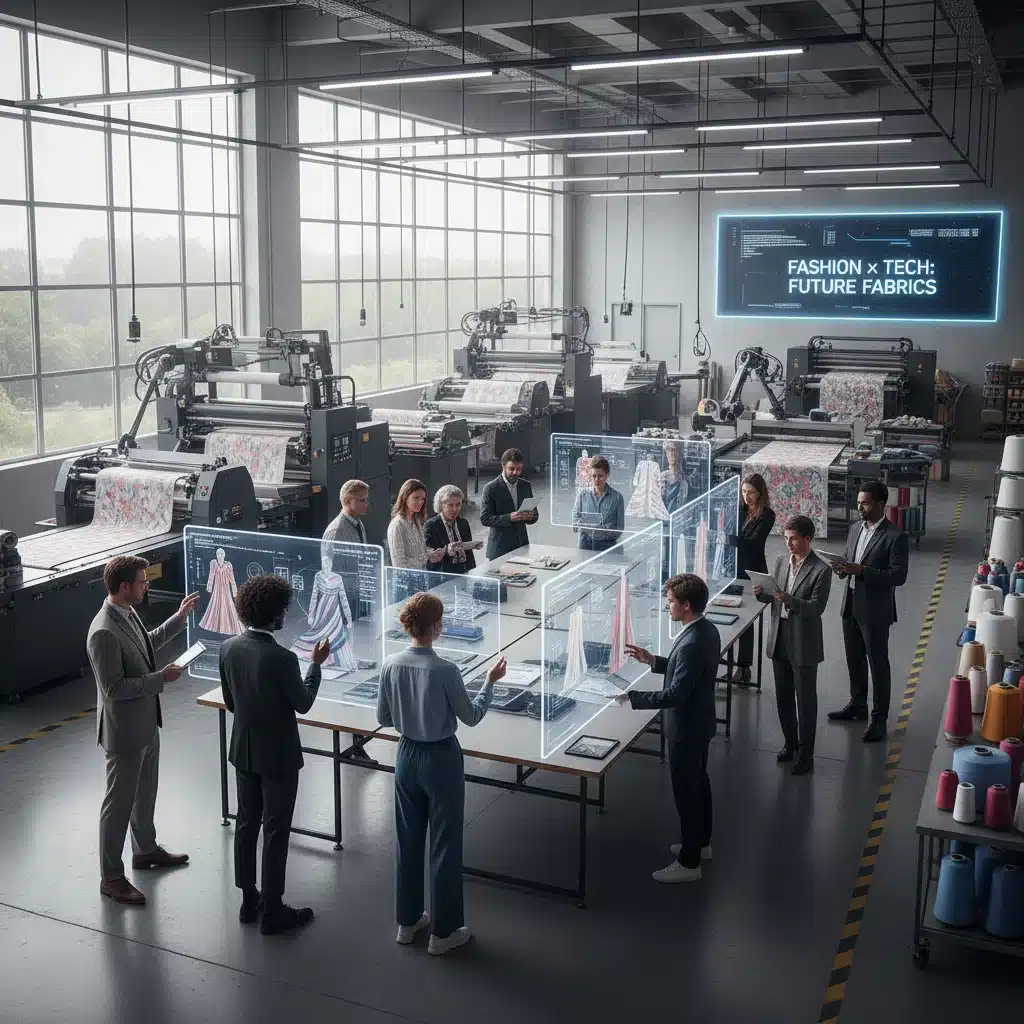
The fashion industry, historically characterized by long lead times, massive inventories, and significant waste, is undergoing a seismic shift. As we approach 2026, a revolutionary concept is taking center stage: on-demand manufacturing. For US fashion brands, this isn’t just a trend; it’s a critical opportunity for growth, sustainability, and competitive advantage. The traditional model of predicting consumer tastes months in advance, producing in bulk, and then hoping for sales is becoming increasingly unsustainable in a fast-paced, consumer-driven market. On-demand manufacturing offers a compelling alternative, promising agility, reduced risk, and a more responsive supply chain.
This comprehensive guide will delve into the intricacies of on-demand manufacturing, exploring its benefits, the challenges brands might face, and the strategic roadmap for US fashion companies to successfully integrate this model into their operations by 2026. We will examine how this paradigm shift can redefine efficiency, profitability, and environmental responsibility within the American fashion landscape.
Anúncios
Understanding On-Demand Manufacturing in Fashion
At its core, on-demand manufacturing, also known as ‘made-to-order’ or ‘lean manufacturing,’ is a production strategy where products are only manufactured once an order has been placed. Unlike traditional mass production, which relies on forecasting and producing large quantities in anticipation of demand, on-demand production directly responds to actual consumer purchases. This fundamental difference has profound implications for every aspect of the fashion value chain.
The Evolution from Traditional to On-Demand
For decades, the fashion industry operated on a seasonal cycle. Designers would create collections, manufacturers would produce them in large batches, and retailers would stock them, often leading to overproduction and end-of-season discounts to clear unsold inventory. This model, while effective for a time, is ill-suited for the modern consumer who demands personalization, speed, and ethical production. The rise of e-commerce and social media has further amplified the need for brands to be more agile and responsive.
Anúncios
On-demand fashion US brands are now recognizing that this model offers a path to mitigate many of these inherent risks. It leverages advanced technologies such as 3D printing, digital textile printing, robotic automation, and sophisticated data analytics to enable efficient, small-batch, or even single-unit production. This shift is not merely about technology; it’s a fundamental rethinking of how fashion is created, produced, and delivered to the customer.
Key Benefits for US Fashion Brands by 2026
The advantages of adopting an on-demand manufacturing model are multifaceted, impacting financial performance, environmental footprint, and brand reputation. For US fashion brands looking to thrive in the coming years, these benefits are too significant to ignore.
1. Reduced Waste and Enhanced Sustainability
One of the most compelling arguments for on-demand production is its significant impact on sustainability. The fashion industry is notoriously one of the largest polluters globally, with textile waste being a major environmental concern. Traditional manufacturing often results in vast amounts of unsold inventory, which frequently ends up in landfills. By producing only what is sold, on-demand eliminates overproduction, drastically reducing material waste, water usage, and energy consumption associated with excess inventory.
Furthermore, on-demand allows for more localized production, cutting down on the carbon emissions associated with global shipping. This aligns perfectly with the growing consumer demand for eco-conscious brands and positions US fashion companies as leaders in sustainable practices.
2. Increased Agility and Responsiveness to Trends
The fashion cycle is accelerating, and trends can emerge and dissipate within weeks. Traditional manufacturing, with its long lead times, struggles to keep pace. On-demand production, however, allows brands to respond almost instantaneously to shifting consumer preferences and emerging trends. This means products can be designed, produced, and delivered in a fraction of the time, ensuring that brands always offer what customers want, when they want it.
This agility translates into higher sales, fewer markdowns, and a stronger connection with the target audience. Brands can test new designs with minimal risk, scale up successful lines quickly, and even offer limited-edition drops that create urgency and exclusivity.
3. Minimized Inventory Risk and Cost Savings
Inventory is often cited as a major financial burden for fashion businesses. Holding large amounts of stock ties up capital, incurs storage costs, and carries the risk of obsolescence. On-demand manufacturing virtually eliminates these issues. By producing only when an order is placed, brands can operate with significantly less inventory, freeing up capital that can be reinvested into design, marketing, or technological innovation.
The reduction in warehousing costs, insurance, and the need for frequent discounting to clear unsold stock directly contributes to improved profit margins. This lean operational model is a game-changer for financial stability and growth in the competitive US fashion market.
4. Personalization and Customization Opportunities
Modern consumers crave uniqueness. On-demand manufacturing opens up unparalleled opportunities for personalization and customization at scale. Imagine customers being able to choose specific colors, prints, or even minor design modifications for their garments, which are then produced specifically for them. This level of bespoke service fosters stronger customer loyalty and allows brands to command premium prices.
For on-demand fashion US brands, this capability can be a powerful differentiator, moving beyond mass-market offerings to provide truly unique products that resonate deeply with individual consumers.
5. Empowering Local Production and Job Creation
The reshoring of manufacturing is a significant aspect of the on-demand movement, particularly for the United States. By leveraging advanced technologies, it becomes economically viable to produce goods domestically, reducing reliance on overseas supply chains. This not only shortens lead times and improves quality control but also creates skilled manufacturing jobs within the US. This resonates with consumers who prioritize supporting local economies and ethical labor practices.
Investing in domestic on-demand manufacturing infrastructure strengthens the American economy and builds a more resilient and sustainable fashion ecosystem.
Challenges and Considerations for Implementation
While the benefits are clear, transitioning to an on-demand model is not without its challenges. US fashion brands must carefully consider these factors to ensure a successful implementation.
1. Initial Investment in Technology and Infrastructure
Adopting on-demand manufacturing often requires significant upfront investment in new technologies, such as digital printers, automated cutting machines, and sophisticated software for design, production management, and order fulfillment. Brands may also need to reconfigure their existing production facilities or partner with specialized on-demand manufacturers. This initial capital outlay can be a barrier for smaller brands, although accessible solutions and partnerships are emerging.
2. Supply Chain Reconfiguration and Supplier Relationships
The traditional supply chain is geared towards bulk orders. On-demand requires a fundamental shift, demanding suppliers who can provide raw materials quickly and in smaller quantities. Brands need to establish new relationships with agile suppliers who are responsive and can integrate seamlessly into a just-in-time production system. This might involve sourcing materials domestically or near-shoring to reduce lead times.
3. Design Process Adaptation
The design process itself needs to evolve. Designers must think about modularity, digital pattern making, and how designs can be efficiently translated into a made-to-order workflow. This often requires new skills and tools, such as 3D design software that allows for virtual prototyping and direct integration with manufacturing processes.
4. Quality Control and Consistency
Maintaining consistent quality across smaller, individualized production runs can be more complex than in mass production. Robust quality control protocols and automated inspection systems are crucial to ensure that every custom-made item meets brand standards. Investing in skilled labor and advanced machinery capable of precise, repeatable results is paramount.
5. Customer Expectations and Lead Times
While on-demand offers speed compared to traditional cycles, customers accustomed to immediate gratification from in-stock items might still perceive a longer lead time for custom-made products. Brands need to manage customer expectations effectively, clearly communicating production and delivery timelines. The perceived value of a personalized, sustainably made item can often outweigh a slightly longer wait.
Strategic Roadmap for US Fashion Brands by 2026
To successfully navigate the transition to on-demand manufacturing, US fashion brands should consider a strategic, phased approach.
Phase 1: Assessment and Pilot Programs
- Evaluate Current Operations: Analyze existing supply chains, production processes, and inventory management to identify areas where on-demand principles can be most effectively applied.
- Technology Audit: Determine current technological capabilities and identify necessary investments in software (CAD/CAM, ERP, PLM), hardware (digital printers, automated cutters), and automation.
- Supplier Engagement: Begin discussions with existing and potential new suppliers about their capacity for smaller, more frequent orders and quicker turnaround times.
- Pilot Project: Start with a small-scale pilot project, perhaps a specific product line or a limited-edition collection, to test the on-demand workflow, identify bottlenecks, and refine processes before a full-scale rollout.
Phase 2: Technology Integration and Workforce Development
- Invest in Digital Tools: Implement 3D design software for virtual prototyping, digital pattern making, and direct integration with manufacturing. Explore AI-driven forecasting and demand planning tools.
- Automate Production: Integrate automated cutting, digital printing, and robotic sewing where feasible to increase efficiency and consistency.
- Upskill Workforce: Train existing employees on new technologies and processes. This includes designers, pattern makers, production managers, and quality control personnel. Consider hiring new talent with expertise in fashion technology and data analytics.
Phase 3: Marketing, Sales, and Customer Experience
- Communicate the Value: Clearly articulate the benefits of on-demand to customers – personalization, sustainability, uniqueness. Use this as a key marketing differentiator.
- Transparent Communication: Be transparent about lead times and the production process. Engage customers in the journey of their custom-made item.
- Optimize E-commerce Platforms: Ensure online stores can handle customization options, display virtual samples, and provide seamless order tracking for made-to-order items.
- Feedback Loop: Establish robust mechanisms for customer feedback to continuously refine products and processes based on real-time input.
The Role of Technology in Powering On-Demand
The promise of on-demand manufacturing is inextricably linked to technological advancements. Without these innovations, the agility and efficiency required would be impossible.
Artificial Intelligence and Machine Learning
AI and ML play a crucial role in predicting micro-trends, optimizing design variations, and managing complex production schedules. By analyzing vast datasets of consumer behavior, social media trends, and sales data, AI can help brands make more informed decisions about what to offer and when, even within an on-demand framework. This minimizes the risk of even small-batch overproduction.
3D Design and Virtual Prototyping
Tools like CLO3D, Optitex, and Browzwear allow designers to create garments in a virtual environment, test fits, and visualize different fabric drapes without producing physical samples. This dramatically reduces material waste during the design phase and speeds up the approval process, making the transition from concept to production much faster for on-demand fashion US brands.
Digital Textile Printing
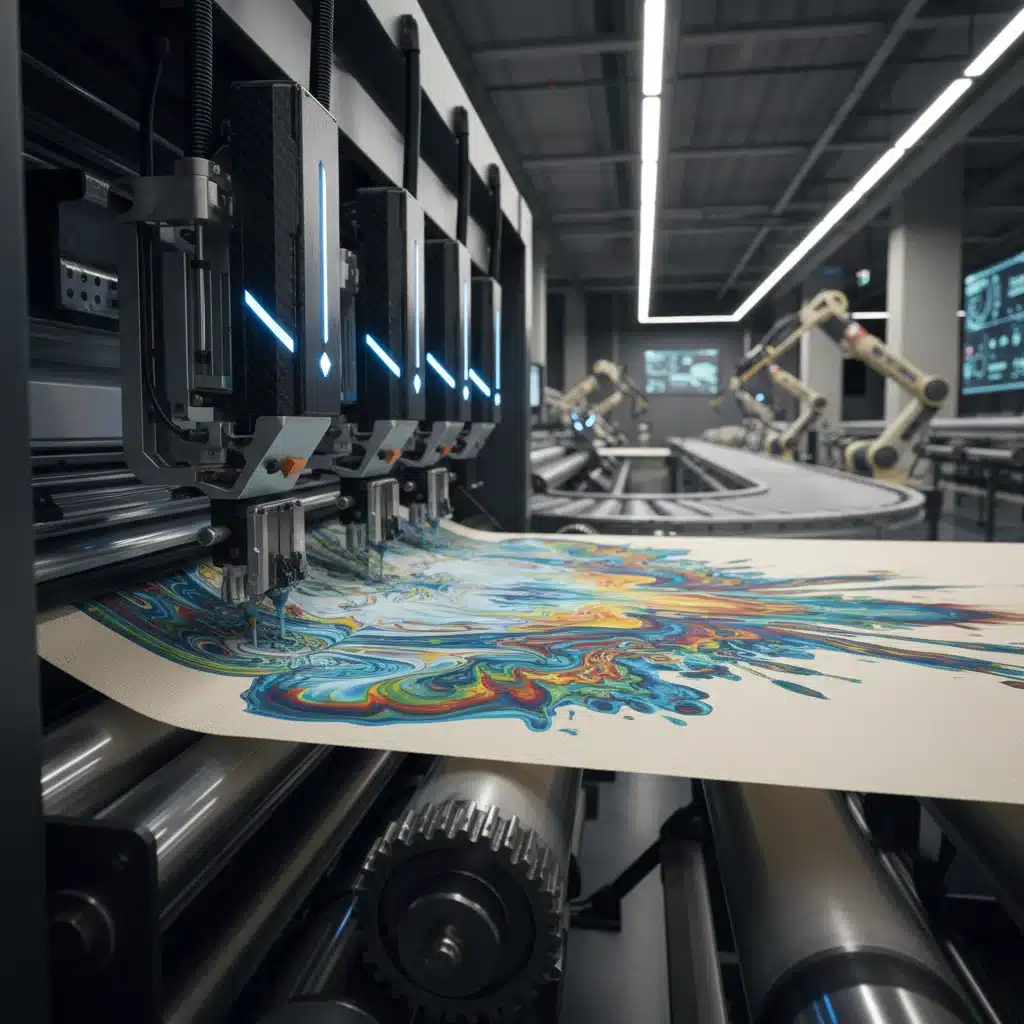
Digital printing technology enables the application of intricate designs directly onto fabric without the need for screens or extensive setup. This is ideal for small runs, custom prints, and rapid design changes, making it a cornerstone of efficient on-demand production.
Robotics and Automation
While still evolving, robotics are increasingly being used for tasks like fabric cutting, sewing, and material handling. Automation enhances precision, reduces labor costs, and allows for consistent quality across individualized products, crucial for scaling on-demand manufacturing operations.
Sustainability: A Driving Force for On-Demand Adoption
The environmental imperative is arguably one of the strongest drivers for the widespread adoption of on-demand fashion US. Consumers, particularly younger generations, are increasingly prioritizing sustainability and ethical practices when making purchasing decisions. Brands that fail to adapt risk losing market share and relevance.
On-demand manufacturing directly addresses several critical environmental issues:
- Waste Reduction: Eliminating overproduction means significantly less fabric, trim, and finished garment waste ending up in landfills.
- Resource Efficiency: Digital printing uses less water and energy compared to traditional dyeing processes. Automated cutting optimizes fabric utilization, reducing scrap.
- Reduced Carbon Footprint: Localized production minimizes the need for long-distance shipping of raw materials and finished goods, lowering transportation emissions.
- Circular Economy Principles: On-demand facilitates the integration of recycled materials and promotes durability, aligning with circular economy models where products are designed for longevity and eventual recycling.
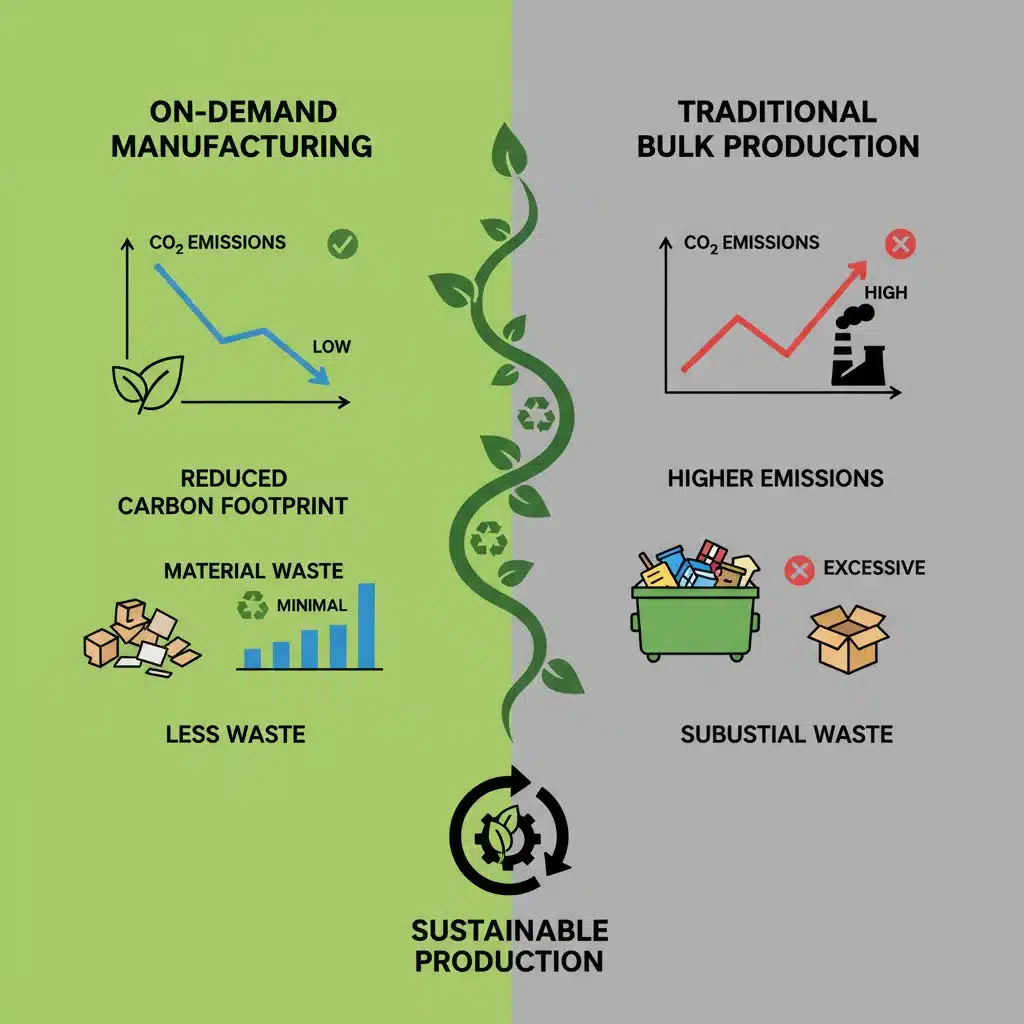
By 2026, brands that have successfully integrated on-demand will not only be more efficient and profitable but also more resilient to supply chain disruptions and more aligned with the values of their environmentally conscious customer base. This dual benefit of economic viability and ecological responsibility positions on-demand as a win-win for the future of US fashion.
Future Outlook: Beyond 2026
The journey towards a fully on-demand fashion industry won’t stop in 2026. This period will likely be a critical inflection point, solidifying the model’s viability and demonstrating its transformative power. Looking further ahead, we can anticipate even greater integration of technologies and further evolution of the fashion ecosystem.
Hyper-Personalization and Mass Customization
As 3D body scanning and AI-powered design tools become more sophisticated, we could see a future where garments are not just custom-designed but custom-fitted to individual body measurements, creating truly unique and perfectly fitting clothing for everyone. This level of hyper-personalization will be a hallmark of advanced on-demand manufacturing.
Decentralized Micro-Factories
The concept of localized production could evolve into a network of highly automated, decentralized micro-factories spread across urban centers. These smaller, agile units could produce garments even closer to the point of sale, further reducing transportation costs and environmental impact, and providing ultra-fast delivery options for on-demand fashion US consumers.
Full Transparency and Traceability
Blockchain technology could be integrated to provide complete transparency throughout the on-demand supply chain, allowing consumers to trace the origin of every material and the entire production journey of their garment. This builds unparalleled trust and reinforces the ethical credentials of brands.
New Business Models
The shift to on-demand will likely spawn entirely new business models, such as subscription services for custom-fitted clothing, rental models for personalized high-fashion items, and collaborative platforms where consumers actively participate in the design process. These innovations will further cement the relevance and profitability of the on-demand manufacturing paradigm.
Conclusion: Seizing the On-Demand Opportunity
The landscape of the US fashion industry is changing rapidly, driven by technological innovation, evolving consumer demands, and an urgent need for greater sustainability. On-demand manufacturing represents a powerful solution, offering a pathway to reduced waste, increased agility, significant cost savings, and unparalleled opportunities for personalization.
By 2026, US fashion brands that embrace this transformative model will be better positioned to meet the challenges of a dynamic market, build stronger customer relationships, and contribute positively to the planet. While the transition requires strategic investment and a willingness to adapt, the long-term benefits in terms of profitability, brand reputation, and environmental stewardship are undeniable. The future of fashion is agile, sustainable, and custom-made, and the time for US brands to seize this on-demand fashion US opportunity is now.