Benchmarking Success: Average Profit Margins for US Fashion Businesses in 2026

Anúncios
The fashion industry, a dynamic tapestry of creativity, innovation, and commerce, is perpetually evolving. For US fashion businesses, understanding and optimizing fashion profit margins is not merely a financial exercise; it’s a critical determinant of survival and growth. As we look towards 2026, the landscape is shaped by technological advancements, shifting consumer behaviors, and an increased emphasis on sustainability and ethical practices. This comprehensive guide delves into the projected average profit margins for US fashion businesses in 2026, offering insights, benchmarks, and actionable strategies to help your enterprise thrive in an increasingly competitive market.
Anúncios
Benchmarking Success: Average Profit Margins for US Fashion Businesses in 2026
The fashion sector, known for its rapid cycles and trend-driven nature, presents unique challenges and opportunities for profitability. Unlike many other industries, fashion businesses contend with seasonality, rapid product obsolescence, complex supply chains, and demanding consumer expectations. Therefore, a deep understanding of fashion profit margins is indispensable for strategic planning and operational efficiency.
Understanding Fashion Profit Margins: The Core Metrics
Before we project into 2026, it’s essential to define what constitutes fashion profit margins. There are several key metrics businesses typically track:
Anúncios
- Gross Profit Margin: This is the percentage of revenue left after deducting the cost of goods sold (COGS). It reflects the efficiency of your production and pricing strategies. For fashion, COGS includes raw materials, manufacturing labor, and direct overhead.
- Operating Profit Margin: Also known as EBIT (Earnings Before Interest and Taxes) margin, this metric indicates the profitability of a company’s core operations, excluding interest and taxes. It accounts for COGS and operating expenses such as marketing, administrative costs, and research and development.
- Net Profit Margin: The ultimate measure of profitability, net profit margin represents the percentage of revenue left after all expenses, including COGS, operating expenses, interest, and taxes, have been deducted. This is the true bottom line for any fashion business.
Each of these margins provides a different lens through which to view a business’s financial health and operational effectiveness. Benchmarking these against industry averages and competitors is crucial for identifying areas of strength and weakness.
Historically, fashion profit margins have varied significantly across different segments of the industry. Luxury brands often command higher gross margins due to premium pricing and perceived value, while fast fashion retailers rely on high volume and rapid inventory turnover, typically operating on tighter individual product margins. Small to medium-sized businesses (SMBs) in the US fashion sector often face unique challenges, including economies of scale, access to capital, and intense competition from larger players.
In recent years, the average gross profit margin for US fashion businesses has hovered around 40-60%, with operating margins typically ranging from 5-15%, and net profit margins often settling between 2-8%. These figures are broad averages and can fluctuate wildly based on product category (e.g., haute couture vs. basic apparel), business model (e.g., direct-to-consumer vs. wholesale), and market conditions. The COVID-19 pandemic, for instance, dramatically impacted these figures, forcing many businesses to adapt quickly to digital sales and leaner operations.
Projected Average Profit Margins for US Fashion Businesses in 2026
Forecasting fashion profit margins for 2026 requires considering several converging trends and economic factors. While precise numbers are challenging to predict, we can anticipate certain shifts:
- Gross Profit Margin: We project gross profit margins to remain relatively stable or slightly increase for businesses that effectively manage their supply chains and optimize production. Brands leveraging nearshoring/reshoring, sustainable material sourcing, and efficient inventory management could see their gross margins at the higher end of the 45-65% range. Those heavily reliant on traditional, less efficient global supply chains might struggle to maintain historical averages, potentially falling into the 35-45% range.
- Operating Profit Margin: Operating profit margins are likely to face continued pressure. The increasing cost of digital marketing, investment in technology (AI, AR/VR), and the demand for enhanced customer experiences will drive up operating expenses. We anticipate average operating margins to be in the 7-12% range. Businesses that successfully integrate automation, personalize marketing, and streamline their operations will likely exceed this, potentially reaching 15% or more.
- Net Profit Margin: Net profit margins will be the most sensitive to these pressures. With rising interest rates (though potentially stabilizing by 2026), increased regulatory compliance costs (especially around sustainability), and a competitive tax environment, net margins are projected to be in the 3-7% range for the average US fashion business. Highly optimized and innovative companies could push beyond 10%, while less agile businesses might find themselves closer to 1-2% or even in the red.
These projections are predicated on a relatively stable global economy, continued technological adoption, and an intensifying focus on sustainability and ethical production. Any significant geopolitical shifts or economic downturns could, of course, alter these forecasts.
Key Factors Influencing Fashion Profit Margins in 2026
Several critical factors will significantly impact fashion profit margins in the coming years:
1. Supply Chain Resilience and Optimization
The lessons learned from recent global disruptions will drive fashion businesses to build more resilient and agile supply chains. This includes diversifying sourcing, investing in transparent traceability, and potentially nearshoring or reshoring production to reduce lead times and mitigate risks. Efficient logistics and reduced waste will directly improve gross margins.
2. Digital Transformation and E-commerce Maturity
E-commerce will continue to be a dominant sales channel. Businesses that invest in advanced e-commerce platforms, personalized shopping experiences, and efficient last-mile delivery will gain a competitive edge. The effective use of data analytics to understand consumer preferences, optimize inventory, and target marketing efforts will be crucial for improving both operating and net margins.
3. Sustainability and Ethical Practices
Consumer demand for sustainable and ethically produced fashion is not a passing trend; it’s a fundamental shift. While initial investments in sustainable materials and processes might increase COGS, the long-term benefits include enhanced brand reputation, customer loyalty, and potentially access to new markets. Businesses that fail to adapt risk losing market share and facing regulatory penalties, negatively impacting their fashion profit margins.
4. Personalization and Customer Experience
In a crowded market, personalized experiences, from product recommendations to bespoke services, will differentiate brands. Investing in AI-driven personalization, augmented reality (AR) for virtual try-ons, and seamless omni-channel experiences will be critical. While these investments add to operating costs, they can significantly boost customer lifetime value and sales volume, ultimately supporting stronger margins.
5. Inflationary Pressures and Cost Management
Inflation in raw material costs, labor, and shipping will continue to be a concern. Fashion businesses will need sophisticated cost management strategies, including hedging against currency fluctuations, negotiating favorable supplier contracts, and optimizing operational efficiencies to protect their fashion profit margins.
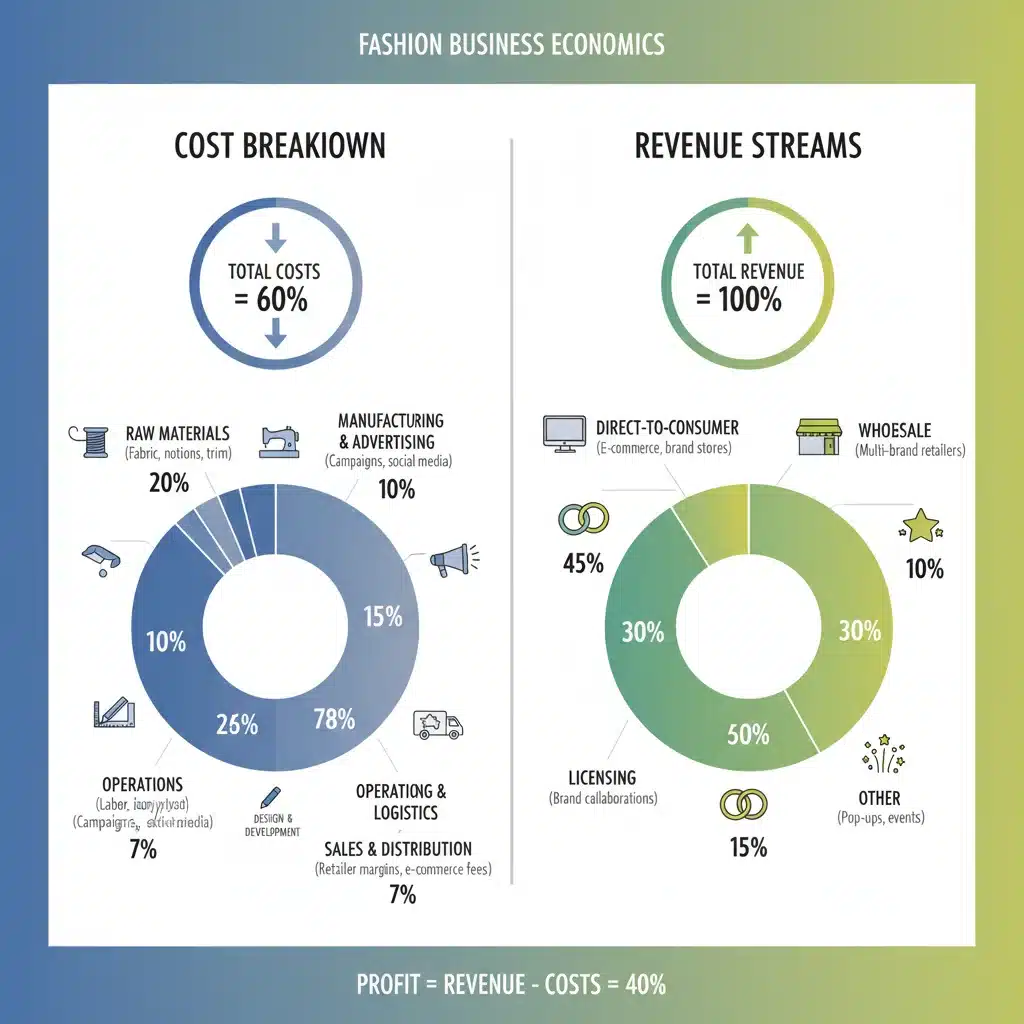
Strategies to Improve Fashion Profit Margins by 2026
Achieving and exceeding average fashion profit margins in 2026 will require proactive and strategic initiatives. Here are actionable strategies:
1. Optimize Inventory Management
Excess inventory is a significant drain on profitability. Implementing advanced inventory management systems that leverage AI and predictive analytics can help forecast demand more accurately, reduce overproduction, and minimize markdowns. Just-in-time (JIT) inventory strategies, where feasible, can also cut carrying costs and improve cash flow, directly boosting gross margins.
2. Enhance Supply Chain Efficiency and Transparency
Beyond resilience, focus on efficiency. This means negotiating better terms with suppliers, exploring alternative manufacturing locations, and adopting technologies that provide end-to-end visibility. Blockchain, for example, can enhance transparency and traceability, which is increasingly valued by consumers and can justify premium pricing, thereby improving gross margins.
3. Invest in Data-Driven Marketing and Sales
Move beyond broad marketing campaigns. Utilize customer data to create highly targeted and personalized marketing efforts. This reduces wasted ad spend and increases conversion rates. Employing CRM (Customer Relationship Management) systems to understand customer preferences and predict buying patterns can lead to more effective sales strategies and higher average order values, positively impacting operating margins.
4. Embrace Digital Innovation
From 3D design software that reduces sampling costs to AI-powered chatbots that enhance customer service, digital tools offer numerous opportunities for efficiency gains. Virtual try-on technologies can reduce returns, while predictive analytics can inform design and merchandising decisions, all contributing to healthier fashion profit margins.
5. Focus on Direct-to-Consumer (DTC) Channels
While wholesale remains important, expanding DTC channels allows businesses to capture a larger share of the retail price, thereby increasing gross margins. DTC also provides direct access to customer data, enabling better personalization and feedback loops for product development. This model, however, requires significant investment in e-commerce infrastructure, marketing, and logistics.
6. Prioritize Sustainability and Circularity
Integrate sustainable practices throughout your business model. This includes sourcing eco-friendly materials, reducing waste in manufacturing, and exploring circular economy models like resale, rental, or repair services. While some sustainable practices may have higher upfront costs, they can lead to long-term savings (e.g., reduced material waste) and attract a growing segment of conscious consumers willing to pay a premium, thus supporting higher fashion profit margins.
7. Optimize Pricing Strategies
Dynamic pricing, value-based pricing, and psychological pricing techniques can be employed to maximize revenue without alienating customers. Understanding price elasticity for different product categories and customer segments is key. Avoid aggressive discounting unless strategically necessary, as it directly erodes profit margins.
8. Talent Development and Retention
A skilled and motivated workforce is crucial for innovation and efficiency. Investing in training, fostering a positive work environment, and offering competitive compensation can reduce employee turnover and improve productivity, indirectly impacting operating margins by reducing recruitment and training costs.
Challenges and Opportunities for US Fashion Businesses
The path to robust fashion profit margins in 2026 is not without its hurdles. Intense competition from both established global brands and nimble startups, coupled with the ever-present pressure to innovate, means businesses must be agile and forward-thinking.
Challenges:
- Economic Volatility: Unpredictable economic conditions, including inflation and potential recessions, can dampen consumer spending and increase operational costs.
- Hyper-competition: The ease of entry into the e-commerce space means more brands vying for consumer attention, leading to increased marketing expenses and pressure on pricing.
- Regulatory Landscape: Evolving regulations around sustainability, labor practices, and data privacy can add compliance costs and operational complexities.
- Talent Gap: Finding and retaining skilled professionals in areas like data science, supply chain management, and digital marketing can be challenging.
Opportunities:
- Technological Advancements: AI, machine learning, AR/VR, and blockchain offer unprecedented opportunities for efficiency, personalization, and transparency.
- Niche Markets: Catering to specific, underserved consumer segments (e.g., adaptive fashion, sustainable luxury, gender-neutral apparel) can command higher margins due to reduced competition.
- Global Expansion: Digital platforms make it easier for US fashion businesses to reach international markets, diversifying revenue streams and potentially improving economies of scale.
- Circular Economy Models: Embracing resale, rental, and repair offers new revenue streams and appeals to environmentally conscious consumers, enhancing brand loyalty and profitability.

The Role of Technology in Boosting Profitability
Technology is not just an enabler; it’s a direct driver of improved fashion profit margins. By 2026, its integration will be even more pervasive:
- Artificial Intelligence (AI) and Machine Learning (ML): AI will power more accurate demand forecasting, inventory optimization, personalized marketing, and even design processes. This leads to reduced waste, higher conversion rates, and more efficient resource allocation.
- Augmented Reality (AR) and Virtual Reality (VR): AR/VR will revolutionize the shopping experience, offering virtual try-ons, immersive store experiences, and enhanced product visualization. This can reduce returns, increase customer engagement, and drive sales.
- Blockchain Technology: Beyond supply chain transparency, blockchain can facilitate secure transactions, intellectual property protection for designs, and even create unique digital assets (NFTs) that offer new revenue streams and enhance brand value.
- Automation and Robotics: In manufacturing and warehousing, automation can reduce labor costs, improve precision, and speed up production, directly impacting gross margins.
Businesses that strategically adopt and integrate these technologies will be better positioned to control costs, enhance customer value, and ultimately achieve superior fashion profit margins.
Conclusion: Navigating Towards Profitable Fashion in 2026
The US fashion industry in 2026 will be characterized by continued evolution, driven by technological innovation, shifting consumer values, and economic dynamics. While average fashion profit margins may face ongoing pressures from rising costs and intense competition, significant opportunities exist for businesses that are agile, strategic, and committed to embracing change.
Success will hinge on a holistic approach that prioritizes:
- Operational Excellence: Streamlining supply chains, optimizing inventory, and leveraging automation.
- Customer-Centricity: Delivering personalized experiences and building strong brand loyalty.
- Sustainability and Ethics: Meeting consumer demand for responsible production and consumption.
- Technological Adoption: Harnessing AI, AR/VR, and data analytics to drive efficiency and innovation.
By diligently focusing on these areas, US fashion businesses can not only meet but potentially exceed the projected average profit margins, securing a robust and sustainable future in this vibrant industry. Regular benchmarking against these projected averages and continuous adaptation to market forces will be the hallmarks of profitable fashion enterprises in 2026 and beyond.
Staying informed about industry trends, investing wisely in technology, and fostering a culture of innovation will be paramount for any fashion business aiming for sustained success and healthy fashion profit margins in the coming years.