Fashion Rental Services 2026: Is 20% of Your Clothing Budget Worth It in the US?

Anúncios
The 2026 Guide to Fashion Rental Services: Is it Worth 20% of Your Clothing Budget in the US?
The fashion landscape is in constant flux, and as we stride into 2026, one trend continues to gain significant traction: fashion rental services. Once a niche offering for special occasions, clothing rental has evolved into a mainstream option for everyday wear, offering a compelling alternative to traditional retail. But the burning question for many consumers in the US remains: is allocating 20% of your annual clothing budget to these services a financially sound, stylistically smart, and environmentally conscious decision?
Anúncios
This comprehensive guide will delve deep into the world of fashion rental services in 2026, exploring their evolution, benefits, drawbacks, and ultimately, help you determine if this model aligns with your personal style, financial goals, and values. We’ll examine the economic implications, the sustainability factor, and the sheer convenience that these platforms offer, providing a roadmap for navigating this exciting sector of the fashion industry.
The idea of renting clothes might still raise an eyebrow for some, but the reality is that the industry has matured considerably. With advanced logistics, sophisticated cleaning processes, and an ever-expanding inventory of styles and brands, fashion rental services are no longer just about borrowing a dress for a wedding. They are about curating a dynamic wardrobe, experimenting with trends without commitment, and making a conscious choice towards a more sustainable lifestyle.
Anúncios
The Evolution of Fashion Rental Services in the US
Rewind a decade, and fashion rental services were primarily synonymous with high-end designer gowns for black-tie events. Companies like Rent the Runway pioneered the concept, making luxury accessible. Fast forward to 2026, and the market has diversified dramatically. We now see a spectrum of services catering to various price points, styles, and needs, from daily workwear and casual outfits to maternity clothes and even children’s apparel.
Several factors have fueled this growth. Consumer attitudes have shifted, with a greater emphasis on sustainability and conscious consumption. The rise of the ‘experience economy’ means people value access over ownership. Furthermore, the constant churn of social media trends has created a desire for novelty in wardrobes that traditional purchasing simply can’t keep up with without significant financial outlay or environmental cost. Fashion rental services offer a perfect solution to these modern dilemmas.
Technological advancements have also played a crucial role. AI-powered recommendation engines personalize selections, making it easier for users to discover new styles. Improved logistics networks ensure timely delivery and returns. And robust cleaning and maintenance protocols guarantee that garments arrive in pristine condition, addressing initial consumer concerns about hygiene and quality. The competitive landscape has also driven innovation, with companies constantly refining their offerings to attract and retain subscribers.
Understanding the Financial Equation: Is 20% Realistic?
The core question for many is the financial viability. Is dedicating 20% of your clothing budget to fashion rental services a wise move? To answer this, we need to consider your current spending habits, your desired wardrobe variety, and the cost structure of rental subscriptions.
Let’s assume an average American spends approximately $1,500 to $2,000 annually on clothing. If you allocate 20% of this, you’re looking at a budget of $300 to $400 per year for rentals. Many popular rental services offer monthly subscriptions ranging from $70 to $150, depending on the number of items you can rent per month and the tier of clothing (e.g., everyday vs. designer). For example, a basic plan might allow 4 items per month for around $80, totaling $960 annually. A more premium plan with unlimited swaps could easily exceed $1500 per year. So, 20% might be a starting point, but for many, it could be a significant portion, or even the entirety, of their clothing budget if they fully embrace the rental model.
However, the value isn’t just in the direct cost. Consider the ‘cost per wear’ of an item. A dress bought for $100 and worn twice has a cost per wear of $50. If you rent a similar dress for $30 and wear it once, the cost per wear is $30. If you’re someone who buys many items that are worn only a few times, fashion rental services can offer significant savings. You get access to a constantly rotating wardrobe without the depreciation of ownership or the burden of storage.
Furthermore, rental services often provide access to higher-quality garments or designer pieces that might be out of budget for purchase. This means you can elevate your style for a fraction of the cost. The key is to analyze your current spending: Are you buying fast fashion frequently? Do you have a closet full of clothes with tags still on them? If so, redirecting a portion of that spending to rentals could be a highly efficient way to manage your wardrobe and finances.
The Sustainability Factor: Reducing Your Fashion Footprint
Beyond the financial incentives, a major driver for the growth of fashion rental services is their potential to foster a more sustainable fashion industry. The traditional linear model of ‘take-make-dispose’ is environmentally devastating, contributing to vast amounts of waste, water pollution, and carbon emissions.
By participating in fashion rental services, you contribute to a circular economy. Garments are worn by multiple people over their lifespan, maximizing their utility and reducing the demand for new production. This significantly lowers the environmental impact associated with manufacturing, transportation, and eventual disposal. While the cleaning and shipping processes of rental services do have an environmental footprint, many companies are actively investing in eco-friendly detergents, optimized logistics, and sustainable packaging to mitigate these effects.
Consumers are increasingly aware of the environmental cost of their clothing choices. Fast fashion, while affordable, often comes at a high price for the planet. Fashion rental services offer a guilt-free way to enjoy diverse styles without contributing to overconsumption. It encourages a mindset of ‘access over ownership,’ which is crucial for building a more sustainable future for fashion.

Moreover, rental platforms often invest in the longevity of their garments through professional cleaning and repair. This extends the life cycle of clothing, a stark contrast to the disposable nature of many fast fashion items. For those committed to reducing their carbon footprint and supporting ethical practices, allocating a portion of their budget to fashion rental services is a tangible step towards a more responsible wardrobe.
Style Versatility and Convenience: A Wardrobe Without Limits
Imagine having a constantly refreshed wardrobe, perfectly suited for every occasion, without the commitment of purchase. This is the promise of fashion rental services. For the fashion-forward individual, the ability to experiment with new trends, try out different aesthetics, and wear designer pieces for specific events without the hefty price tag is incredibly appealing.
One of the biggest advantages is the sheer variety. Whether you need a specific outfit for a job interview, a glamorous dress for a wedding, a chic ensemble for a vacation, or simply want to refresh your everyday look, rental platforms offer an extensive selection. This eliminates the ‘nothing to wear’ dilemma and allows you to adapt your style to different facets of your life without accumulating a cluttered closet.
The convenience factor cannot be overstated. Most fashion rental services operate on a subscription model, delivering items directly to your door and providing easy return labels. This saves time and effort that would otherwise be spent shopping, dry cleaning, and organizing a large personal wardrobe. For busy professionals, parents, or anyone with a dynamic social calendar, this ‘wardrobe on demand’ can be a game-changer.
Furthermore, rental allows for low-commitment experimentation. Ever wondered if a certain color, print, or silhouette would suit you? Instead of buying an expensive item only to realize it’s not quite right, you can rent it, try it out, and send it back. This reduces buyer’s remorse and encourages a more playful approach to personal style. It’s about enjoying fashion as an art form, rather than a series of permanent purchases.
Potential Drawbacks and Considerations
While the benefits of fashion rental services are substantial, it’s important to acknowledge potential drawbacks and consider if they align with your lifestyle.
- Hygiene Concerns: While rental companies employ rigorous cleaning protocols, some individuals may still have reservations about wearing clothes previously worn by others. It’s crucial to research the specific hygiene practices of any service you consider.
- Availability and Sizing: Popular items can sometimes be booked out, especially during peak seasons. Sizing can also be a challenge, as fits vary between brands. Most services offer detailed sizing guides and customer reviews to help, but it’s not a perfect science.
- Wear and Tear/Damage: While minor wear and tear are usually covered, significant damage or loss of an item can incur hefty fees. Users need to be mindful and treat rented garments with care.
- Cost vs. Ownership: For items you wear constantly and want to keep for years, purchasing might still be more cost-effective in the long run. The 20% allocation needs to be balanced with your need for foundational pieces you truly own.
- Shipping Footprint: While overall sustainability is a net positive, the frequent shipping of garments does contribute to a carbon footprint. Companies are working to optimize logistics, but it’s a factor to consider.
- Limited Personalization: While you can choose items, you can’t alter them for a perfect fit, which might be a drawback for those who prefer tailored clothing.
Understanding these aspects is key to making an informed decision about integrating fashion rental services into your life. It’s not a one-size-fits-all solution, and what works for one person might not work for another.
Choosing the Right Fashion Rental Service for You
In 2026, the market for fashion rental services is robust and diverse. To make the best choice, consider the following factors:
- Your Style Profile: Do you prefer classic, bohemian, minimalist, or trendy? Look for services that curate collections aligning with your aesthetic.
- Occasion Focus: Do you need clothes for everyday, work, special events, or a mix? Some services specialize, while others offer broader categories.
- Budget: Compare subscription tiers and the number of items offered. Ensure the cost fits within your 20% (or more) allocation.
- Brand Selection: Do they carry brands you love or aspire to wear?
- Logistics: Check their shipping times, return process, and customer service.
- Hygiene and Quality Assurance: Read reviews and understand their cleaning and maintenance standards.
- Sustainability Initiatives: If eco-consciousness is a priority, research their efforts in this area.
Some prominent players in the US market in 2026 include:
- Rent the Runway: Still a leader, offering a wide range of designer and premium contemporary brands for various occasions, with multiple subscription tiers.
- Nuuly: A popular choice for everyday wear, offering a mix of contemporary and vintage pieces, focusing on discovery and casual style.
- Gwynnie Bee: Specializing in sizes 10-32, offering a broad selection for work and casual wear.
- Armoire: Personalized stylist recommendations for work, casual, and special occasions, with a focus on convenience.
- Tulerie/By Rotation (Peer-to-Peer): Platforms that allow individuals to rent out their own designer items, fostering a community and offering unique, often one-off pieces.
By carefully evaluating these options against your personal needs, you can find a service that truly enhances your wardrobe and lifestyle.
Maximizing Your 20% Rental Budget: Tips and Tricks
If you decide that allocating 20% of your clothing budget to fashion rental services is for you, here are some strategies to get the most out of your investment:
- Define Your Needs: Before subscribing, identify what gaps rentals will fill. Is it workwear, occasion wear, or just general wardrobe refresh?
- Plan Your Rentals: Many services allow you to create a ‘closet’ or ‘queue’ of desired items. Plan ahead, especially for special events.
- Experiment Smartly: Use rentals to try out trends or styles you’re unsure about before making a purchase commitment.
- Integrate with Your Owned Wardrobe: Don’t view rentals in isolation. Think about how rented pieces can complement and elevate the items you already own.
- Utilize Unlimited Swaps (if available): If your subscription allows for unlimited swaps, take advantage of it to maximize variety.
- Read Reviews and Check Sizing: Always consult user reviews and detailed sizing charts to minimize returns and ensure a good fit.
- Care for the Garments: Treat rented clothes as if they were your own valuable possessions to avoid damage fees and ensure they last longer for others.
- Track Your Spending: Keep an eye on your total clothing budget to ensure you’re staying within your desired 20% allocation. This includes both rental fees and any purchases you still make.
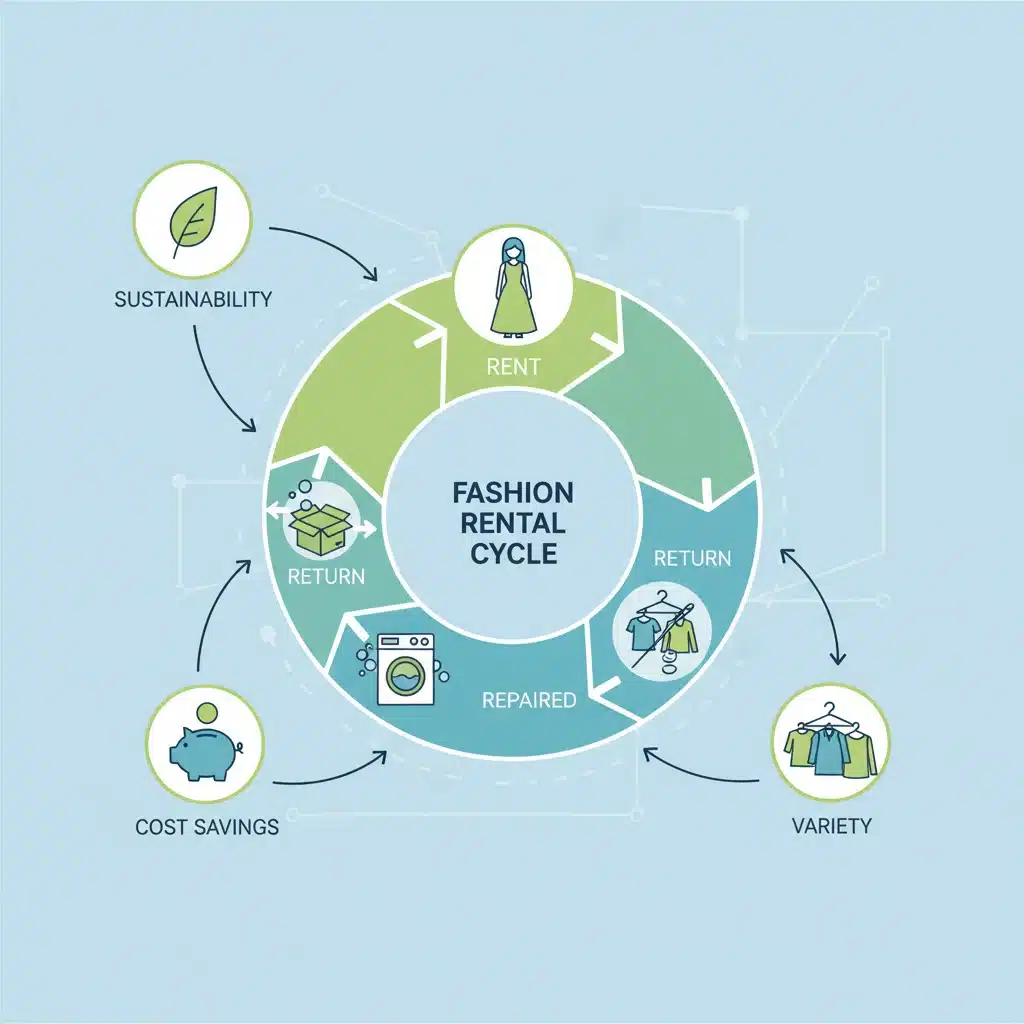
By adopting these practices, you can turn your 20% rental budget into a powerful tool for style, sustainability, and financial savvy.
The Future Outlook for Fashion Rental Services
Looking beyond 2026, the trajectory for fashion rental services appears bright. We can anticipate even greater integration of technology, such as augmented reality (AR) for virtual try-ons, further enhancing the user experience. Personalization will become even more sophisticated, with AI stylists capable of curating entire looks based on individual preferences, body types, and even upcoming events in a user’s calendar.
The market is also likely to see more specialized services emerge, catering to niche demographics or specific clothing categories (e.g., luxury vintage rentals, adaptive fashion rentals). Consolidation within the industry may occur, but also new innovative startups will continue to challenge the status quo. Furthermore, we might see more direct partnerships between brands and rental platforms, with designers actively creating collections specifically for the rental market.
As sustainability becomes an even more pressing global concern, the circular fashion model championed by rental services will only grow in importance. Governments and regulatory bodies might even introduce incentives for businesses and consumers to participate in circular economy initiatives, further boosting the adoption of rental models. The concept of clothing as a service, rather than a product to be owned, is set to become an increasingly dominant paradigm.
The shift away from fast fashion and towards more conscious consumption is not a fleeting trend but a fundamental change in consumer behavior. Fashion rental services are at the forefront of this movement, offering a practical, stylish, and ethical way to engage with clothing. For many, dedicating a significant portion of their clothing budget to rentals will not just be a choice but a preferred mode of fashion consumption.
Conclusion: Making Your Informed Decision
So, is dedicating 20% of your clothing budget to fashion rental services worth it in the US in 2026? The answer, as with most things in life, is nuanced and depends on your individual circumstances. However, for a significant and growing number of consumers, the answer is a resounding yes.
If you value variety, seek access to high-quality or designer pieces, prioritize sustainability, and appreciate the convenience of a rotating wardrobe, then investing in rental services can be an incredibly rewarding decision. It allows you to stay current with trends, express your personal style without commitment, and contribute positively to environmental efforts.
Before committing, take the time to assess your current clothing habits, understand your financial boundaries, and research the various fashion rental services available. Start small, perhaps with a lower-tier subscription, and see how it integrates into your life. You might find that the flexibility, freshness, and financial prudence offered by these services make them an indispensable part of your 2026 wardrobe strategy. The future of fashion is here, and it’s increasingly about renting, not just buying.